Earth, the Body, and the Church
Hannah Langdon
9.11.2026
On the last day of August, Kentucky lost a farmer. Environmentalists lost a champion. Hipsters who love buzzwords like “finding our roots” and “local community” lost their prophet. Suburbanites seized by the desire to homestead lost their role model. And a team of mules lost their driver. Wendell Berry died at 92, prompting people who don’t agree on anything else (like Kentucky Governor Andy Beshear and Congressman Thomas Massie) to join in honoring his legacy.
Wendell Berry was a writer, environmental activist, and farmer. He wrote poetry, nonfiction, and a series of novels set in Port William, Kentucky (a fictionalized version of his hometown, Port Royal). He was a staunch opponent of globalization, and of technologies that he believed damaged the earth and human connection. As early as the 1970s he was protesting the destructive practices of industrial agriculture, the separation of sex from fertility, and the pursuit of efficiency and money above local community. His Manifesto: The Mad Farmer Liberation Front is a good summary of his approach to the world, although it’s a poor example of his writing ability (he’s an exceptional writer, but this poem reads like inspirational wall decor from Hobby Lobby).
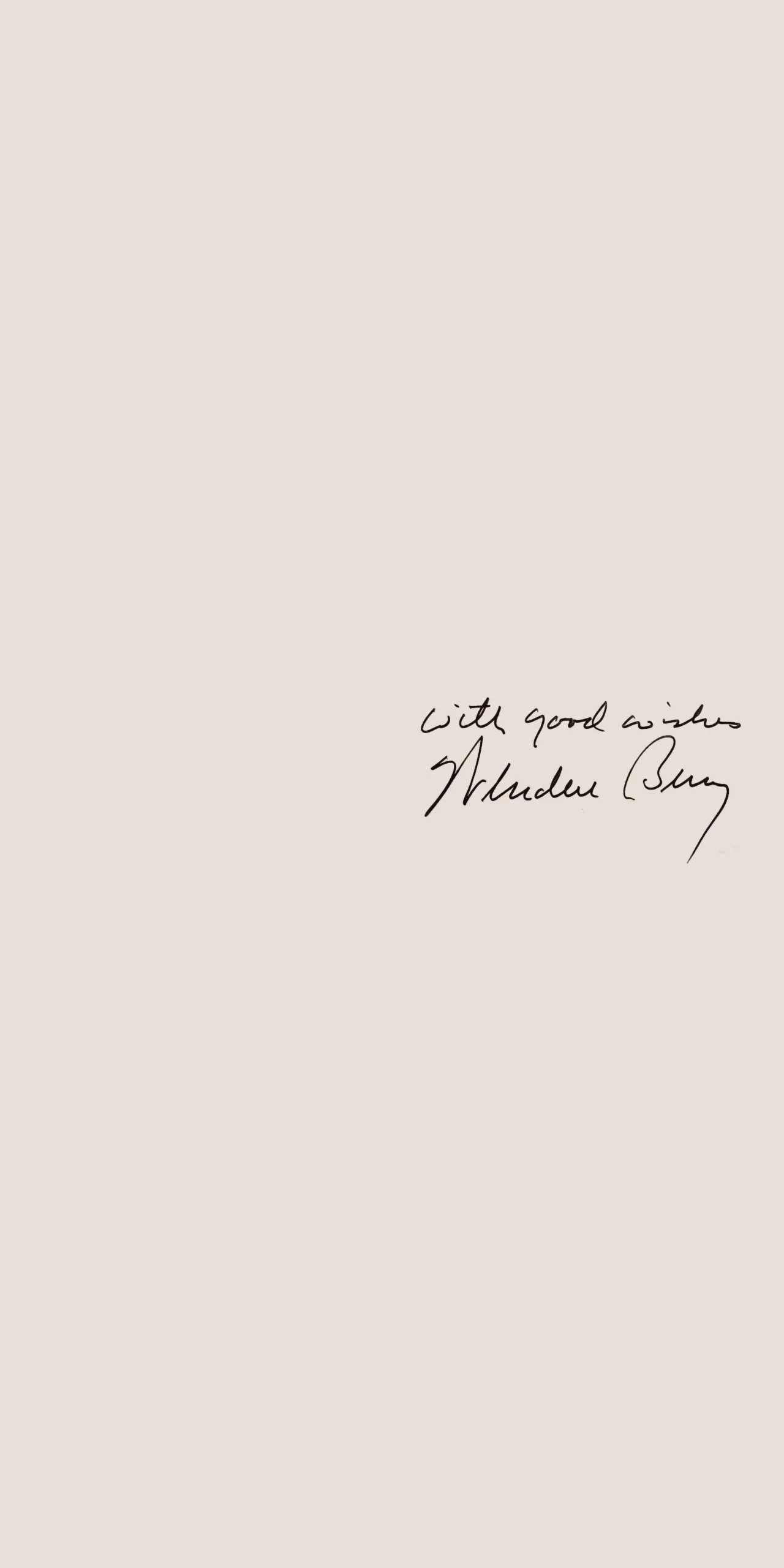
Berry was no mere virtue-signaler. Although he studied at Stanford and taught in New York, he returned to his family farm to work the land with a plow and a team of mules instead of a tractor. He wrote by hand, and his beloved wife Tanya typed out the manuscripts. His essays challenge himself, as well as readers, to live more consistently in tune with the earth and with other humans. He is beloved in part because he humbly embodied the radical life he preached.
In his essay “The Body and the Earth” Berry connects industrial agriculture, the sexual revolution, personal identity crises, body dysmorphia, and the decline of the family household. He writes,
“for our bodies are part of the Creation, and they involve us in all the issues of mystery. But the questions are also agricultural, for no matter how urban our life, our bodies live by farming; we come from the earth and return to it, and so we live in agriculture as we live in flesh. While we live our bodies are moving particles of the earth, joined inextricably both to the soil and to the bodies of other living creatures. It is hardly surprising, then, that there should be some profound resemblances between our treatment of our bodies and our treatment of the earth.”
Berry’s thought bridges, transcends, and critiques contemporary political divides. For many decades, the health of the environment was stereotypically something only leftists cared about and sexual ethics was a distinctly conservative concern. This is a false separation in Berry’s perspective. Conservatives who understand the importance of respecting the integrity of the human person should also care about respecting the integrity of the earth. Both artificial birth control and Round-up are anti-life. He argued for a unified understanding of the person as body and soul, and for people to live in harmony with the land.
Berry’s emphasis on the importance of the body and the earth is the root of what my friend Gracie calls the “vocation of place.” Berry loved the earth, but this love was concretized in his faithfulness to his particular farm in Kentucky. Love does not exist in the abstract. It exists in particular choices and acts of the will. A nomadic “citizen of the world” may have a sense of the breadth of human behavior, but an artist knows his subject intimately because he pays attention to her for a long period of time.
This commitment and attention to specific people and places is central to Berry’s vision.
His focus on place is an antidote to the sense of alienation (or, as Evagrius and Aquinas called it, acedia) that plagues our generation. Acedia is a spiritual sloth manifested in the aimlessness of college graduates with no sense of vocation–torn between “following passion” and “getting ahead in life.” It’s the franticness of “hustle culture” driven to eke out meaning in gym records and resume builders, and the pervasive feeling of restlessness that makes a career or a marriage seem like an insurmountable commitment.
Berry’s solution is to cherish our roots, cultivate our place, and have the courage to give up where we could be to focus on where we are. The opposite of acedia is love, and love can only be cultivated through deliberate attention to a particular person or place that one has committed to. As the narrator in Hannah Coulter reflects, “There is no ‘better place’ than this, not in this world. And it is by this place we’ve got, and our love for it and our keeping of it, that this world is joined to Heaven.”
While Wendell Berry’s writing on economics and environmental ethics often sounds similar to Catholic Social Teaching and his fiction was deeply formed by Dante, he was a Protestant. Once he described himself as a “marginal Christian” who found God in the woods and fields more than his country Baptist church. In Jayber Crow, the main character associates religion with hatred of the body and of Creation. He refers to himself as the “ultimate Protestant” and says, “As I have read the Gospels over the years, the belief has grown in me that Christ did not come to found an organized religion but came instead to found an unorganized one.” In many ways Berry is closer to the American Transcendentalists like Thoreau and Emerson. He rejects established religion in favor of communion with nature.
This is not to condemn Berry, but to examine how Catholics should continue his legacy. I believe that Berry’s eccentric quilt of beliefs from all over denominational and political divides is shared by many today. People are weary of being told that the body and the world are inherently evil. Many have been wounded by the hypocrisy and scandals found in the Church. They want to live a life of love, so they categorize themselves as “spiritual, but not religious.” And, tired of feeling alienated and lonely, they’re becoming more concerned with protecting local communities and the environment.
Catholics need to take up Berry’s vision to show that the Church is the manifestation of love, not its enemy. The Catholic Church is universal in a way that encompasses tremendous individual variety (just think of the differences between saints). By giving our attention to a particular saint, devotion, or parish, we learn more of Christ.
Our generation cries out for roots, belonging, and community. These longings will not be fulfilled by a perfectly-designed town, homestead, or any place on earth. But the earth can direct our eyes upward. As Jayber Crow says, “the earth speaks to us of Heaven, or why would we want to go there?” Throughout the book he has visions of Port William’s members carrying out their life in Heaven, signifying that he thought the best of his town was a foretaste of Heaven.
It’s easy to idealize community life, but Berry’s writing speaks of how to love when ideals are shattered. (As Jayber wonders, “What did love have to say to its own repeated failure to transform the world it might yet redeem?”) I’ve met people who grew up in Appalachian towns in the south and midwest, not unlike the ones Berry describes. Their memories are less pastoral than his. They remember drug overdoses, broken families, and classmates committing suicide because they saw no path ahead of them. And one does get the sense that if we stripped Berry’s prose from some of the scenes he describes, we’d have a different impression of Kentucky. Burley Coulter has a “might as well be wife” for the whole saga, but never weds. The outwardly polished Cecelia Overhold has a bitter marriage. The story’s heroine, Mattie (Keith) Chatham, doesn’t meet Prince Charming. Instead, she marries an egotistical local basketball star who sells his soul and his family to take part in the military-industrial-agriculture complex. Jayber Crow is a wanderer who messes around in Hargrave’s nightlife and never has his own family.
Yet the characters are more than their flaws. Burley is unfailingly generous, and his illegitimate son Danny Branch’s family welcomes and cares for the needy. Mattie pours out her life for her family. Jayber commits his life to quietly serving the town and its members. The line between good and evil isn’t drawn between different types of communities. As Dostoevsky said, it runs through each human heart.
Anyone who clutches her pearls at the cast of Port William characters should open the door of her local parish. Catholics are strange. I’ve sat in churches full of people who chose to stay in the Kentucky towns they grew up in. Sometimes their cellphones go off before Mass. They squeak out bad lyrics at fantastic pitches. Yet they are faithfully present in church each day. They are the first to check in on an absent neighbor, and to “weep with those who weep, and to mourn with those who mourn.”
The Church, like Port William, and like your own parish, is full of hypocrites, drunkards, gossips, pharisees, and adulterers. But if you pay attention, you’ll find that we’re crawling as best we can to glory—one contrite Confession and one daily Mass at a time.
Berry wrote that “Young lovers see a vision of the world redeemed by love. That is the truest thing they see, for without it life is death.” This kind love, which makes its subject beautiful, is the love that Berry and his characters have for their place on earth. And it is a love that requires knowledge and commitment—even if the knowledge isn’t inspiring. This is how Berry challenges me to look at the world, at my town, and at the Church.
This is not at all an excuse for sinful behavior by Catholics. But it’s a frank acknowledgment that if you spend six months (maybe less) engaged in parish life, you’ll begin to smell the piles of dirty laundry hiding under the pews. So let’s not be surprised. After all, St. Paul had to take the Corinthian Christians to task for incest. This is the world that Christ died for. Berry urged us to love our homes despite their flaws. In the same way, we should love our Church and its people despite their failures.
To love Kentucky (or whatever state you live in) and to commit to staying there is a risk. The governor might be terrible. The flooding might be destructive. Strip mining might wreak havoc on the local ecosystem. Appalachian families might fall apart with alcohol and drug abuse. Towns may shrink because of globalization. But, according to Berry, we still love Kentucky and our towns in it. Because it is good to love our particular place on earth.
To enter the Church and commit to the physical Body of Christ is a risk. The pope might be controversial. The politics might be destructive. Corrupt clergy may strip-mine their flocks. Parishes may be filled with gossip, hypocrisy, and dysfunction. But, we still love the Church and our parishes in it. Sometimes the Cross looks like faithful commitment to where God has called us.
Wendell Berry urged us to pick a particular place on earth, love it, and respect its nature. Yet he did not extend this same perspective to the world of religion. Like a home, we must join the Church, love it, and submit to its supernatural authority. It’s this authority that helps us navigate our relationship with the earth.
I mourn that Wendell Berry (like C.S. Lewis and T.S. Eliot before him) never united with the Church in its fullness. That he who loved “the body and the earth” often saw the Body of Christ as opposed to loving particular persons. All I can think is that he was a Moses to this generation—showing us the way to the Promised Land without himself entering in. May God see the fruit of his life and may perpetual Light shine upon him.
In honor of Wendell Berry’s legacy, let us go love our homes and “practice resurrection.” But remember that the only way to rise is to climb onto the Cross, face the binding nails of an established Church and the sometimes-infuriating limitations of physical community, and “Be joyful / though you have considered all the facts.”