“Reading is useless,” a young man told me recently when I asked how he spent his free time. It was jarring to hear, since even people who don’t read much will usually admit that books are good for you: a broader vocabulary, better grammar, and a wider range of interests, to name a few.
But no. He dismissed the whole thing as frivolous. Futile. Worthless. I didn’t feel like arguing, so I simply shook my head and changed the subject.
Nevertheless, his comment stuck with me, and it raises a fair question: are books worth reading? And if so, which ones should we choose?
The answer to the first question is a resounding yes. Put simply, so many of the great men and women of history were voracious readers. They consumed knowledge with an insatiable hunger. They understood that to read is to grow a pair of wings, and on those wings they rose to the heights of contemplative thought.
That brings us to the next question: what ought we to read? Life is short, and the sheer number of books in the world is enough to make anyone dizzy. So I propose we begin with the works that have stood the test of time.
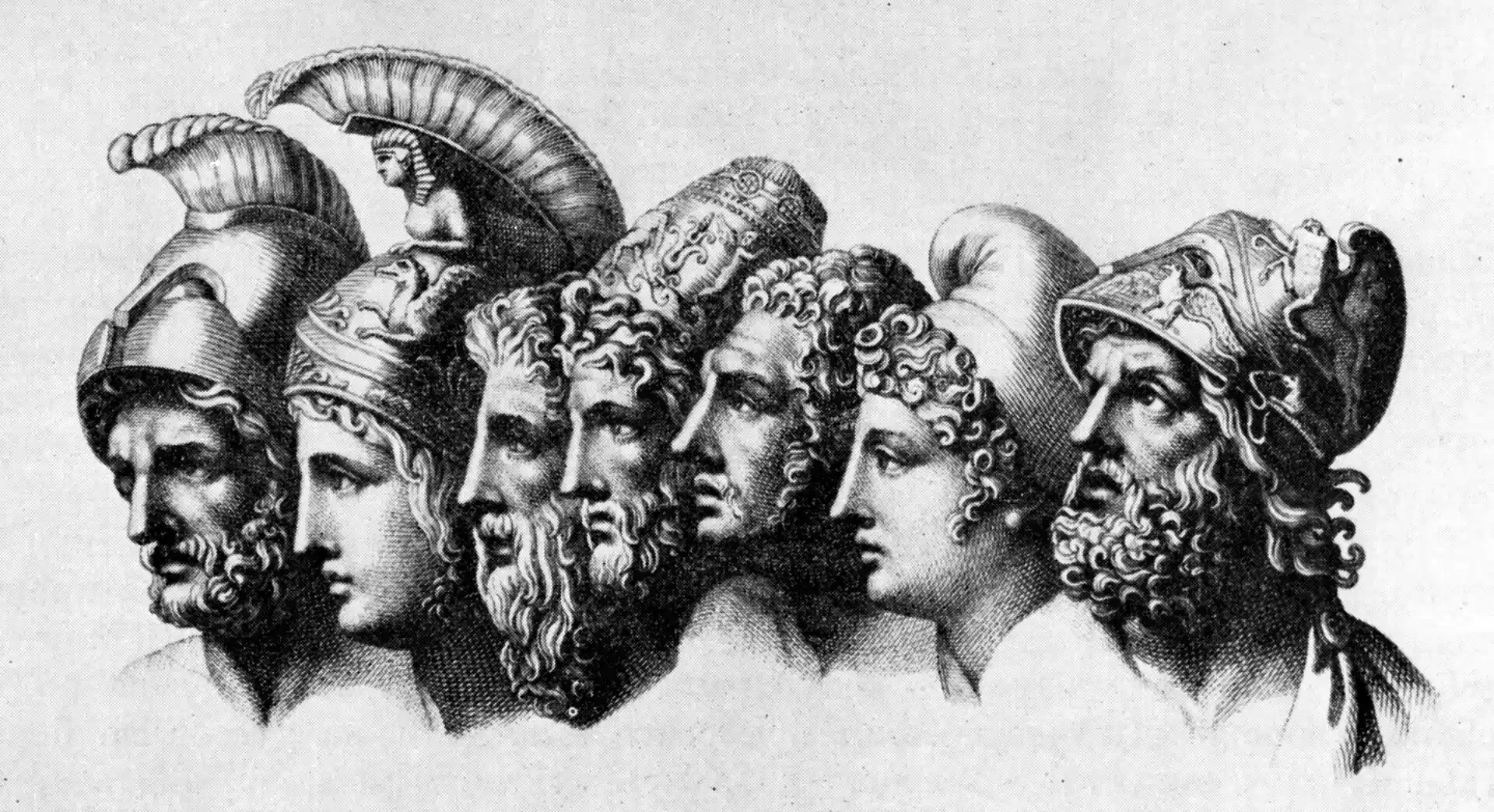
The Great Books, the Classics, whatever you’d like to call them, are the works that have shaped minds for centuries. They are uniquely fit to form us. And there is no better place to start in the Western Canon than with The Iliad.
The Iliad picks up in the tenth year of the Trojan War, and like many epics, its opening lines tell us what the story will be about: “Wrath—sing, O Muse, of the ruinous wrath of Achilles, that inflicted woes without number upon the Achaeans…and of the will of Zeus which was accomplished…”
It is a hauntingly beautiful opening, but can a story written nearly three thousand years ago really teach us anything meaningful? Wasn’t it written by people who never knew Christ? In thinking about these questions, I am reminded of a passage in St. Thérèse of Lisieux’s Story of a Soul, where she compares souls to a field of flowers whose differences together paint a beautiful portrait:“I understood how all the flowers God created are beautiful—how the splendor of the rose and the whiteness of the lily do not take away from the perfume of the violet or the simplicity of the daisy. I understood that if all flowers wanted to be roses, nature would lose her springtime beauty, and the fields would no longer be decked out with little wildflowers. And so it is in the world of souls… He willed to create great souls comparable to lilies and roses, but he created small ones as well… and these must be content to be daisies or violets destined to give joy to God’s glances, when he looks down at His feet. Perfection consists in doing God’s will… in being what He would have us be.”
A few lines later, Thérèse adds that God’s love reaches even the soul who has nothing but the natural law to guide him. The ancient poets did not have the light of Revelation, but they were men of deep natural wisdom and virtue, and their stories have helped people live well for nearly three thousand years. They are certainly men who are part of the field St. Thérèse described.
Have you ever been angry? Held a grudge, or had a hard time letting one go? Have you ever wanted greatness, but because of your own stupidity and vice, left a trail of destruction behind you? Me too. If so, The Iliad is for you.
Cincinnati Thought is launching a slow read of The Iliad over the coming months. They are about to begin publishing a section of the poem each week on Mondays. The Iliad is 15,693 lines long, so it will take a while, but it makes this great book readily accessible—you can now contemplate it over your morning cup of coffee. And just because they are going at a slower pace doesn’t mean you cannot read ahead. The Iliad is worth re-reading.
There are those who mark up the great books, and those whom the great books have marked. I am confident that this community, launching this project, will find themselves among the latter (and you can too, dear reader, if you persevere!). We already have a group of gifted, thoughtful writers, readers, and thinkers. I am excited to see what this will inspire.